
- Afghanistan
- Åland Islands
- Albania
- Algeria
- American Samoa
- Andorra
- Angola
- Anguilla
- Antarctica
- Antigua and Barbuda
- Argentina
- Armenia
- Aruba
- Australia
- Austria
- Azerbaijan
- Bahamas
- Bahrain
- Bangladesh
- Barbados
- Belarus
- Belgium
- Belize
- Benin
- Bermuda
- Bhutan
- Bolivia
- Bonaire, Sint Eustatius, and Saba
- Bosnia and Herzegovina
- Botswana
- Bouvet Island
- Brazil
- British Indian Ocean Territory
- British Virgin Islands
- Brunei
- Bulgaria
- Burkina Faso
- Burundi
- Cambodia
- Cameroon
- Canada
- Cape Verde
- Cayman Islands
- Central African Republic
- Chad
- Chile
- China
- Christmas Island
- Cocos [Keeling] Islands
- Colombia
- Comoros
- Cook Islands
- Costa Rica
- Croatia
- Cuba
- Curaçao
- Cyprus
- Czech Republic
- Congo - Kinshasa
- Denmark
- Djibouti
- Dominica
- Dominican Republic
- Timor-Leste
- Ecuador
- Egypt
- El Salvador
- Equatorial Guinea
- Eritrea
- Estonia
- Ethiopia
- Falkland Islands
- Faroe Islands
- Fiji
- Finland
- France
- French Guiana
- French Polynesia
- French Southern Territories
- Gabon
- Gambia
- Georgia
- Germany
- Ghana
- Gibraltar
- Greece
- Greenland
- Grenada
- Guadeloupe
- Guam
- Guatemala
- Guernsey
- Guinea
- Guinea-Bissau
- Guyana
- Haiti
- Heard Island and McDonald Islands
- Honduras
- Hong Kong SAR China
- Hungary
- Iceland
- India
- Indonesia
- Iran
- Iraq
- Ireland
- Isle of Man
- Israel
- Italy
- Côte d’Ivoire
- Jamaica
- Japan
- Jersey
- Jordan
- Kazakhstan
- Kenya
- Kiribati
- Kosovo
- Kuwait
- Kyrgyzstan
- Laos
- Latvia
- Lebanon
- Lesotho
- Liberia
- Libya
- Liechtenstein
- Lithuania
- Luxembourg
- Macau SAR China
- Macedonia
- Madagascar
- Malawi
- Malaysia
- Maldives
- Mali
- Malta
- Marshall Islands
- Martinique
- Mauritania
- Mauritius
- Mayotte
- Mexico
- Micronesia
- Moldova
- Monaco
- Mongolia
- Montenegro
- Montserrat
- Morocco
- Mozambique
- Myanmar [Burma]
- Namibia
- Nauru
- Nepal
- Netherlands
- Netherlands Antilles
- New Caledonia
- New Zealand
- Nicaragua
- Niger
- Nigeria
- Niue
- Norfolk Island
- North Korea
- Northern Mariana Islands
- Norway
- Oman
- Pakistan
- Palau
- Palestinian Territories
- Panama
- Papua New Guinea
- Paraguay
- Peru
- Philippines
- Pitcairn Islands
- Poland
- Portugal
- Puerto Rico
- Qatar
- Congo - Brazzaville
- Réunion
- Romania
- Russia
- Rwanda
- Saint Barthélemy
- Saint Helena
- Saint Kitts and Nevis
- Saint Lucia
- Saint Martin
- Saint Pierre and Miquelon
- Saint Vincent and the Grenadines
- Samoa
- San Marino
- São Tomé and Príncipe
- Saudi Arabia
- Senegal
- Serbia
- Serbia and Montenegro
- Seychelles
- Sierra Leone
- Singapore
- Sint Maarten
- Slovakia
- Slovenia
- Solomon Islands
- Somalia
- South Africa
- South Georgia and the South Sandwich Islands
- South Korea
- South Sudan
- Spain
- Sri Lanka
- Sudan
- Suriname
- Svalbard and Jan Mayen
- Swaziland
- Sweden
- Switzerland
- Syria
- Taiwan
- Tajikistan
- Tanzania
- Thailand
- Togo
- Tokelau
- Tonga
- Trinidad and Tobago
- Tunisia
- Turkey
- Turkmenistan
- Turks and Caicos Islands
- Tuvalu
- U.S. Virgin Islands
- Uganda
- Ukraine
- United Arab Emirates
- United Kingdom
- United States
- U.S. Minor Outlying Islands
- Uruguay
- Uzbekistan
- Vanuatu
- Vatican City
- Venezuela
- Vietnam
- Wallis and Futuna
- Western Sahara
- Yemen
- Zambia
- Zimbabwe
Nancy Dey

Nancy Dey
- ,
- Security & Safety
- Member Since: 24 Aug 2026
How to choose the right fractional CFO that actually drives ROI
Choosing the right fractional CFO is one of the highest-leverage financial decisions a founder or CEO will make during the scaling phase, and getting it wrong is expensive in ways that rarely show up on the income statement. A bad hire in this seat can distort your runway math, weaken your board narrative, and quietly erode investor confidence at exactly the moment you can least afford it. A great one can compress your fundraising timeline, sharpen your unit economics, and give you a decision-making framework that survives the chaos of hypergrowth. This guide is built for startup founders, CEOs, and growth-stage operators who need a rigorous, practical method for evaluating fractional financial leadership — not a list of generic interview questions, but a complete operating framework grounded in how the best finance leaders actually think.
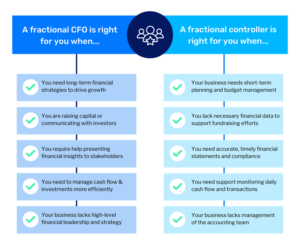
What a Fractional CFO Actually Does — and Why the Role Is Misunderstood
Before you can evaluate candidates, you need a precise definition of the role. The term "fractional CFO" gets applied to everything from a bookkeeper with a better LinkedIn headline to a former public-company finance chief consulting two days a week. That ambiguity is the single biggest source of bad hiring outcomes in this category.
The Three Layers of Financial Leadership
Financial leadership in a growing company operates in three distinct layers, and conflating them is a common and costly mistake.
The first layer is transactional accounting: bookkeeping, accounts payable and receivable, payroll processing, and reconciliation. This is the domain of bookkeepers and accounting managers. It produces accurate records but no forward-looking insight.
The second layer is controllership: month-end close, GAAP-compliant financial statements, revenue recognition, audit preparation, and internal controls. A strong controller ensures your numbers are trustworthy and defensible — a prerequisite for any serious fundraising or diligence process.
The third layer is strategic finance: cash flow modeling, scenario planning, capital allocation, board and investor communication, pricing strategy, and the financial architecture of your growth plan. This is the CFO layer, and it is where fractional engagement delivers the most disproportionate value.
A genuine fractional CFO operates primarily in the third layer, often supervising or collaborating with the second, and rarely touching the first. When you interview candidates, your central task is determining which layer they actually inhabit — regardless of what their title says.
Fractional vs. Full-Time vs. Outsourced Accounting: A Decision Framework
The fractional model makes sense when your company needs senior financial judgment but not forty hours a week of it. That is the case for most companies between pre-seed and Series B. Below that range, an outsourced accounting firm plus a part-time controller usually suffices. Above it — typically past $20M–$30M in revenue or in preparation for an IPO or major acquisition — the complexity and cadence of decisions usually justify a full-time CFO.
The fractional model's core economic advantage is access to experience you could not otherwise afford. A CFO who has guided three companies through Series C rounds and a successful exit commands a full-time compensation package that would consume a meaningful percentage of a growth-stage company's entire operating budget. The same executive, engaged ten to twenty hours per month, delivers the specific expertise you need at a fraction of the cost — and you can scale the engagement up or down as your needs shift.
The trade-off is availability and context. A fractional CFO is not in the building every day, which means your internal team must be capable of executing on the frameworks and decisions that emerge from the engagement. If your finance function is a single overwhelmed generalist, a fractional CFO alone will not fix the problem; you may need a controller first.
Recognizing the Moment You Actually Need a Fractional CFO
Timing is everything in this decision. Engage too early and you pay for strategic firepower you cannot yet deploy. Engage too late and you spend months — or a full fundraising cycle — recovering from financial blind spots that a seasoned operator would have caught in a single session.
The Seven Trigger Events
Certain events reliably signal that the moment has arrived. Fundraising preparation is the most common: building a data room, constructing a defensible financial model, and rehearsing investor Q&A all require CFO-level judgment. NVCA data consistently shows that investors scrutinize financial projections and unit economics more heavily than founders expect, and a weak model is one of the fastest ways to lose a term sheet.
Runway compression is the second trigger. When you have fewer than twelve months of cash and no clear line of sight to profitability or the next raise, you need someone who can model scenarios, identify levers, and help you make hard calls about burn.
Board reporting obligations intensify after any institutional round. A board that receives inconsistent, poorly framed, or late financial reporting loses confidence quickly. A fractional CFO who has presented to boards before can professionalize this cadence within a quarter.
Other triggers include rapid headcount growth that outpaces your financial controls, pricing and margin pressure that requires rigorous unit-economic analysis, M&A or partnership discussions that demand financial due diligence capability, and regulatory or compliance complexity — such as multi-state tax exposure or international expansion — that exceeds your current team's expertise.
The Cost of Waiting Too Long
Founders routinely delay this hire because the need feels abstract until it becomes a crisis. The pattern is predictable: a company raises a seed round, grows revenue, and then discovers during Series A diligence that its revenue recognition is inconsistent, its cohort data is unreliable, and its projections cannot be reconciled to actuals. The remediation cost — in delayed close, discounted valuation, or lost deal — dwarfs what a fractional CFO would have cost over the preceding year.
Harvard Business Review research on scaling organizations repeatedly finds that companies which invest in financial infrastructure ahead of their growth curve outperform those that retrofit it afterward. The fractional model exists precisely to make that ahead-of-curve investment affordable.
The Evaluation Criteria That Actually Predict Success
Most founders evaluate fractional CFO candidates on credentials and chemistry. Both matter, but neither predicts performance as reliably as a structured assessment of five specific dimensions. Build your evaluation around these, and you will avoid the most common and expensive hiring mistakes.
Technical Depth: Beyond the Resume
Technical competence in a fractional CFO means fluency in cash flow forecasting, scenario modeling, unit economics, revenue recognition under ASC 606, and cap table mechanics. It also means knowing the difference between a model that looks impressive and one that drives decisions.
Test this directly. Ask the candidate to walk through how they would build a thirteen-week cash flow forecast for your business. Ask how they would model the impact of a pricing change on gross margin and runway. Ask them to describe a time they identified a financial risk that leadership had not seen. Strong candidates answer with specifics — numbers, timelines, outcomes. Weak candidates speak in generalities about "best practices."
The AICPA's guidance on financial forecasting emphasizes that projections must be grounded in documented assumptions and stress-tested against multiple scenarios. A candidate who cannot articulate their assumptions and how they would test them is not operating at CFO level.
Industry and Stage Fit
A brilliant CFO for a SaaS business may be entirely wrong for a hardware company with inventory and supply chain complexity. Stage matters just as much as sector. A CFO who has spent a career in enterprise software will struggle with the capital intensity and milestone-driven financing of a biotech startup.
Look for pattern match on three variables: business model (recurring revenue, marketplace, transactional, hardware), stage (pre-revenue, early revenue, growth, pre-exit), and financing history (bootstrapped, venture-backed, debt-financed). The closer the match, the shorter the ramp and the more immediately useful the engagement.
One caveat: perfect pattern match is not always optimal. A CFO who has only ever worked in one company's context may lack the pattern recognition that comes from operating across multiple environments. The ideal candidate has deep expertise in your model plus exposure to adjacent contexts that inform their judgment.
Communication and Board Readiness
Your fractional CFO will likely become the primary author of your board materials and a key participant in investor conversations. Communication ability is therefore not a soft skill — it is a core technical requirement.
Evaluate how the candidate explains complex financial concepts. Do they translate or obfuscate? Do they lead with the insight or bury it in detail? Ask them to describe how they would present a missed quarter to a board. The best answer will demonstrate candor, context, and a forward-looking plan — not spin.
CFO.com has documented extensively how the CFO's role has expanded from scorekeeper to strategic partner and communicator. For a growth-stage company, the fractional CFO is often the person who translates operational reality into the language investors and board members expect. If they cannot do that fluently, the engagement will underdeliver regardless of their analytical skill.
Systems, Tools, and Operational Pragmatism
Ask which systems the candidate has implemented and worked within: QuickBooks, NetSuite, Xero, Bill.com, Ramp, Brex, Looker, Anaplan, and various FP&A platforms. More important than the specific tools is their philosophy about them. A CFO who insists on enterprise-grade systems for a ten-person startup is as problematic as one who has never outgrown spreadsheets.
The right answer reflects pragmatism: implement the minimum viable infrastructure that supports current decisions and can scale for the next eighteen to twenty-four months. Ask the candidate to describe a time they inherited a messy finance stack and how they prioritized fixes. Their answer reveals whether they think in terms of business impact or technical perfection.
Availability, Engagement Structure, and Alignment
Fractional engagements fail most often not because of competence gaps but because of structural misalignment. Clarify upfront: How many hours per month? Which days? How will they communicate between sessions? What is their response time expectation for urgent matters?
Beware of candidates who are overcommitted. A fractional CFO juggling eight clients cannot give your company the attention it needs during a fundraising sprint. Ask directly how many active engagements they maintain and how they allocate time during peak periods. A candid answer about capacity limits is a sign of professionalism, not weakness.
Also clarify the scope boundary between the fractional CFO and your internal team. Who owns the model? Who prepares board decks? Who manages the relationship with your accounting firm? Ambiguity here produces duplicated effort and dropped responsibilities.
Red Flags, Vetting Tactics, and Reference Intelligence
Even a well-structured evaluation can miss warning signs if you do not know what to look for. The following patterns reliably predict problematic engagements, and the vetting tactics below will surface them before you sign a contract.
Behavioral Red Flags
Vagueness about past outcomes. A CFO who cannot describe specific results — "we reduced DSO from 62 to 38 days," "we closed a $12M Series B at a 20% higher valuation than the initial term sheet" — is either inexperienced or inflating their role. Push for specifics and note whether the details hold up under follow-up questions.
Inability to say "I don't know." Confident incompetence is more dangerous than honest uncertainty. A strong CFO will tell you when a question falls outside their expertise and describe how they would find the answer.
Discomfort with your stage. If the candidate keeps referencing processes and structures that only make sense at a much larger company, they may be unable to operate effectively in resource-constrained environments. Listen for whether their recommendations are calibrated to your reality.
Poor listening. A CFO who spends the interview talking rather than asking questions will likely spend the engagement prescribing rather than diagnosing. The best candidates ask about your business model, your constraints, your board dynamics, and your definition of success before offering solutions.
Resistance to defined deliverables. A fractional CFO should be comfortable committing to specific outputs: a monthly financial package, a rolling cash flow forecast, a fundraising-ready model. Reluctance to define deliverables suggests the engagement will drift.
Reference Calls That Actually Reveal Something
Standard reference calls produce standard answers. To get useful intelligence, change the questions. Instead of "Would you work with them again?" ask: "Describe a situation where they delivered bad news. How did they handle it?" and "What was the most significant disagreement you had with them, and how was it resolved?" and "What kind of company or stage are they best suited for — and where would they struggle?"
Speak to at least three references, and try to include one who worked with the candidate during a period of stress — a down round, a missed forecast, a leadership transition. Performance under pressure is the most predictive data point you can gather.
Also verify the candidate's claimed role. In fractional and advisory contexts, titles can be generous. Confirm what they actually owned versus what they supported.
Structuring a Paid Trial Engagement
The single most effective vetting tactic is a paid trial project. Engage the candidate for a defined scope — a cash flow model, a board deck review, a fundraising readiness assessment — over two to four weeks. This accomplishes three things: it tests their actual working style, it produces a tangible deliverable you can evaluate, and it gives your team a chance to assess collaboration fit.
Structure the trial with clear deliverables, a fixed fee, and a defined endpoint. If it goes well, convert to an ongoing engagement. If not, you have lost a modest amount of money and gained significant information. This approach is far cheaper than a bad six-month engagement.
Structuring the Engagement for Maximum Return
Selecting the right person is necessary but not sufficient. How you structure and manage the engagement determines whether you capture the full value of their expertise or squander it on misaligned expectations.
Defining Scope, Cadence, and Deliverables
Start with a written scope that specifies the deliverables, the cadence of meetings, the communication channels, and the boundaries of the role. A typical growth-stage engagement might include a monthly financial review, a rolling thirteen-week cash flow forecast, quarterly board materials, and on-call availability for strategic questions.
Be explicit about what is out of scope. If you expect the fractional CFO to manage your bookkeeper, say so. If you expect them to attend every investor meeting, say so. Unstated expectations are the primary cause of fractional cfo companies engagement dissatisfaction.
Integrating the CFO Into Your Operating Rhythm
The fractional CFO should be embedded in your decision-making cadence, not bolted on as a periodic reviewer. Include them in leadership meetings where financial implications are discussed. Give them visibility into sales pipeline, hiring plans, and product roadmap. The quality of their advice is directly proportional to the quality of their context.
Assign an internal owner — typically a controller, finance manager, or operations lead — who is responsible for executing on the CFO's recommendations and maintaining the financial infrastructure between sessions. This person is the connective tissue that makes the fractional model work.
Measuring ROI and Knowing When to Transition
Define success metrics at the outset. These might include: achieving a target close timeline, completing a fundraising round, reducing forecast variance, or improving gross margin visibility. Review these metrics quarterly and adjust the engagement accordingly.
Plan for the transition to a full-time CFO before you need it. A good fractional CFO will help you identify when the role has outgrown the fractional model and will assist in recruiting their successor. The best engagements end with a clean handoff, not a gradual fade.
Making the Decision: A Summary and Next Steps
Choosing the right fractional CFO comes down to disciplined evaluation against five dimensions — technical depth, industry and stage fit, communication and board readiness, operational pragmatism, and structural alignment — combined with rigorous vetting through targeted reference calls and a paid trial engagement. The role is not a commodity, and the difference between an adequate fractional CFO and an exceptional one is measured in fundraising outcomes, runway extension, and the quality of every financial decision your company makes during its most formative years.

. First, define your trigger event and the specific deliverables you need over the next two quarters. Second, build a candidate pool through venture capital platform networks, CFO services firms, and peer founder referrals — prioritizing pattern match on business model and stage. Third, run structured interviews that test technical depth and communication through real scenarios, not hypotheticals. Fourth, conduct reference calls that probe performance under pressure. Fifth, run a paid trial project before committing to an ongoing engagement. Finally, structure the engagement with written scope, defined cadence, and measurable success criteria — and revisit those criteria every quarter.
Do this well, and your fractional CFO becomes one of the most valuable relationships in your company's growth story. Do it poorly, and you will spend a year paying for advice that never quite fits. The framework above is designed to make the first outcome the likely one.
Details
| Phone | 3302342798 |
| Email Address | nancy-dey@twistz.top |
| Gender | Female |
| Salary | 15 - 72 |
| Address | 23100 |
List your Job requirements and Search thousands of job all in one place